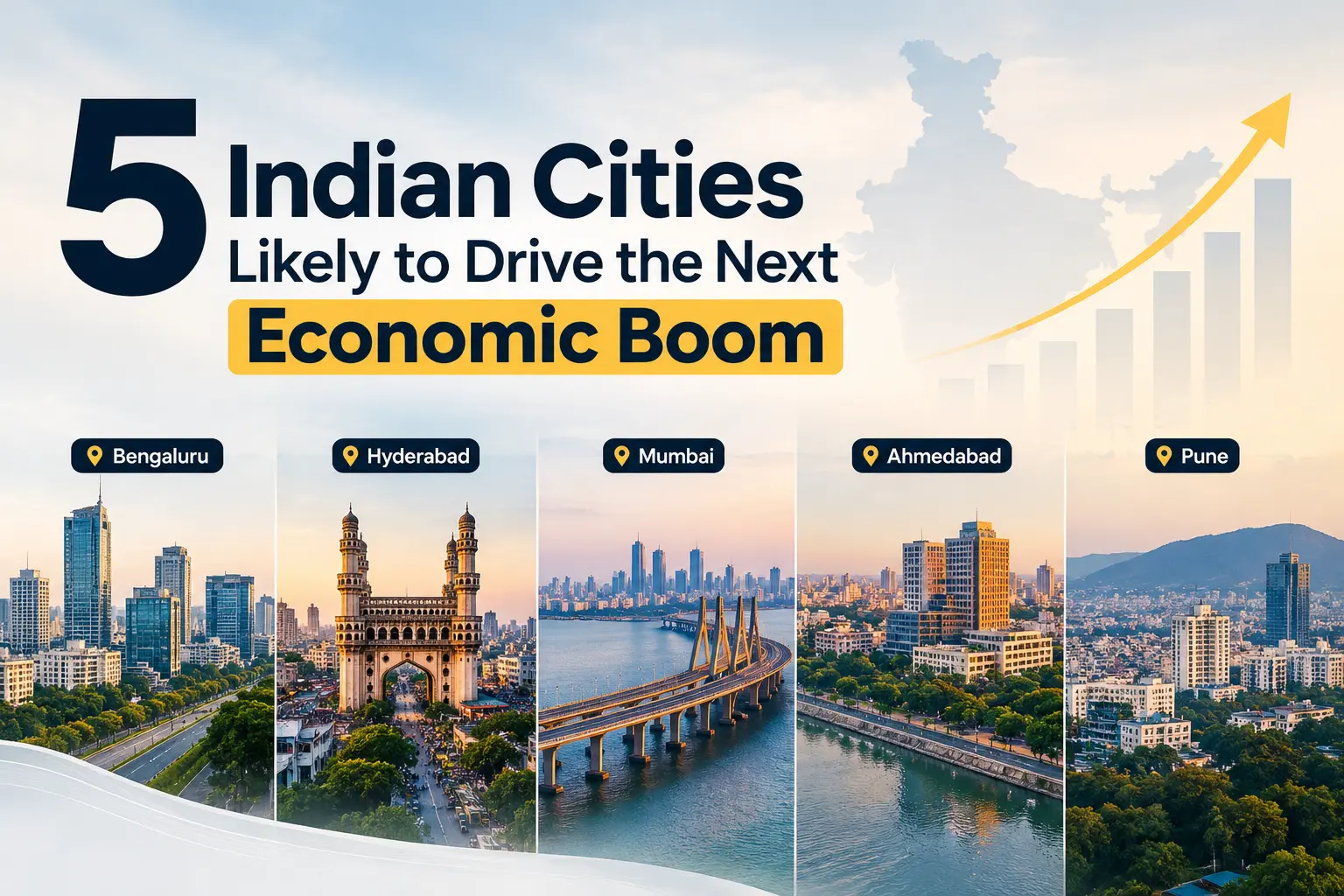
5 Indian Cities Likely to Drive the Next Economic Boom
India’s cities are changing fast. New expressways, airports, metro lines and business parks are reshaping where people work and where they want to live. If you’re an investor, a business owner or a homebuyer, knowing which cities are gaining momentum can help you make smarter decisions.
Here are five cities worth watching, and what each could mean for real estate.
1. Noida: Where Infrastructure Meets Opportunity
Noida has moved well beyond its “suburb of Delhi” image. Its position in Delhi-NCR, wide roads, planned sectors and growing corporate presence make it one of North India’s most talked-about investment markets.
The biggest story is the upcoming Noida International Airport at Jewar. Together with the Yamuna Expressway and planned industrial corridors, it is expected to bring more businesses, jobs and housing demand to the region. The proposed New Noida project adds to this, with plans for large-scale industrial growth.
What it means for property buyers: When jobs and connectivity grow, housing follows. Noida offers everything from affordable apartments to premium residences, plus retail shops, office spaces and pre-leased commercial property.
The Noida Expressway stands out for buyers who want more upscale living. Demand for 3 BHK and 4 BHK luxury apartments in Noida, especially in gated communities with clubhouses and modern amenities, keeps rising. For those with bigger budgets, ultra-luxury flats near Noida Expressway and luxury apartments in Noida above ₹3 crore are a growing segment.
2. Bengaluru: The Technology and Innovation Capital
Bengaluru’s strength is its ecosystem. IT giants, startups, global capability centres and research firms all operate here, and AI, fintech and biotechnology are adding fresh momentum.
Metro expansion and better links to employment corridors are also helping the city grow outward. Areas such as Whitefield, Sarjapur Road, Electronic City and North Bengaluru have drawn attention because they sit close to tech parks.
What it means for property buyers: A steady stream of skilled professionals keeps demand healthy for rentals, apartments and gated communities. Investors usually look at proximity to workplaces, connectivity and rental demand before choosing a micro-market.
3. Hyderabad: Tech, Pharma and a Growing Corporate Base
Hyderabad has built a strong reputation in IT, pharmaceuticals and life sciences. HITEC City, Gachibowli and the Financial District are now home to major technology firms, financial institutions and multinationals.
What makes Hyderabad interesting is its mix of industries. Pharma and healthcare give the economy a solid base beyond software, which can make growth more resilient.
What it means for property buyers: The market is varied, from reasonably priced apartments to premium gated communities and luxury homes. If you’re buying here, look closely at connectivity, the developer’s reputation, construction quality and neighbourhood infrastructure.
4. Pune: A Balanced Economy With Staying Power
Pune doesn’t rely on a single industry. IT, automobiles, manufacturing, education and research all play a part, and that variety tends to make a city’s economy steadier.
Hinjewadi, Kharadi, Wakad and Baner are popular with working professionals and investors alike. Better public transport and new connectivity projects could make these areas even more accessible.
What it means for property buyers: Pune has options at every price point, from affordable housing to luxury gated projects. The best opportunities tend to be where job growth, infrastructure and housing demand are rising together, such as near IT parks, industrial clusters and educational hubs.
5. Mumbai: The Financial Powerhouse, Still Expanding
Mumbai remains India’s financial capital, with major banks, stock exchanges, corporate headquarters and a huge entertainment industry. But its next chapter is about the wider Mumbai Metropolitan Region.
Projects like the Mumbai Trans Harbour Link, metro expansion and Navi Mumbai International Airport are improving connections across the region and opening up new growth pockets.
What it means for property buyers: Established neighbourhoods will keep commanding premium prices, but emerging corridors in and around Navi Mumbai may appeal to buyers looking for value. Whatever the location, check project approvals, developer credibility and real end-user demand first.
What Do These Cities Have in Common?
Each city has its own economic story, but the same few factors keep appearing:
Infrastructure: Airports, expressways and metro lines open up new residential and commercial areas.
Jobs: New offices, industrial parks and companies create housing and rental demand.
Business growth: Multinationals and expanding firms increase the need for offices and retail space.
Urbanisation: More people moving to cities means more demand for homes, schools and hospitals.
Quality of life: Modern amenities, green spaces and good healthcare influence where people choose to buy.